Compact AM/FM Radio Receiver
Description
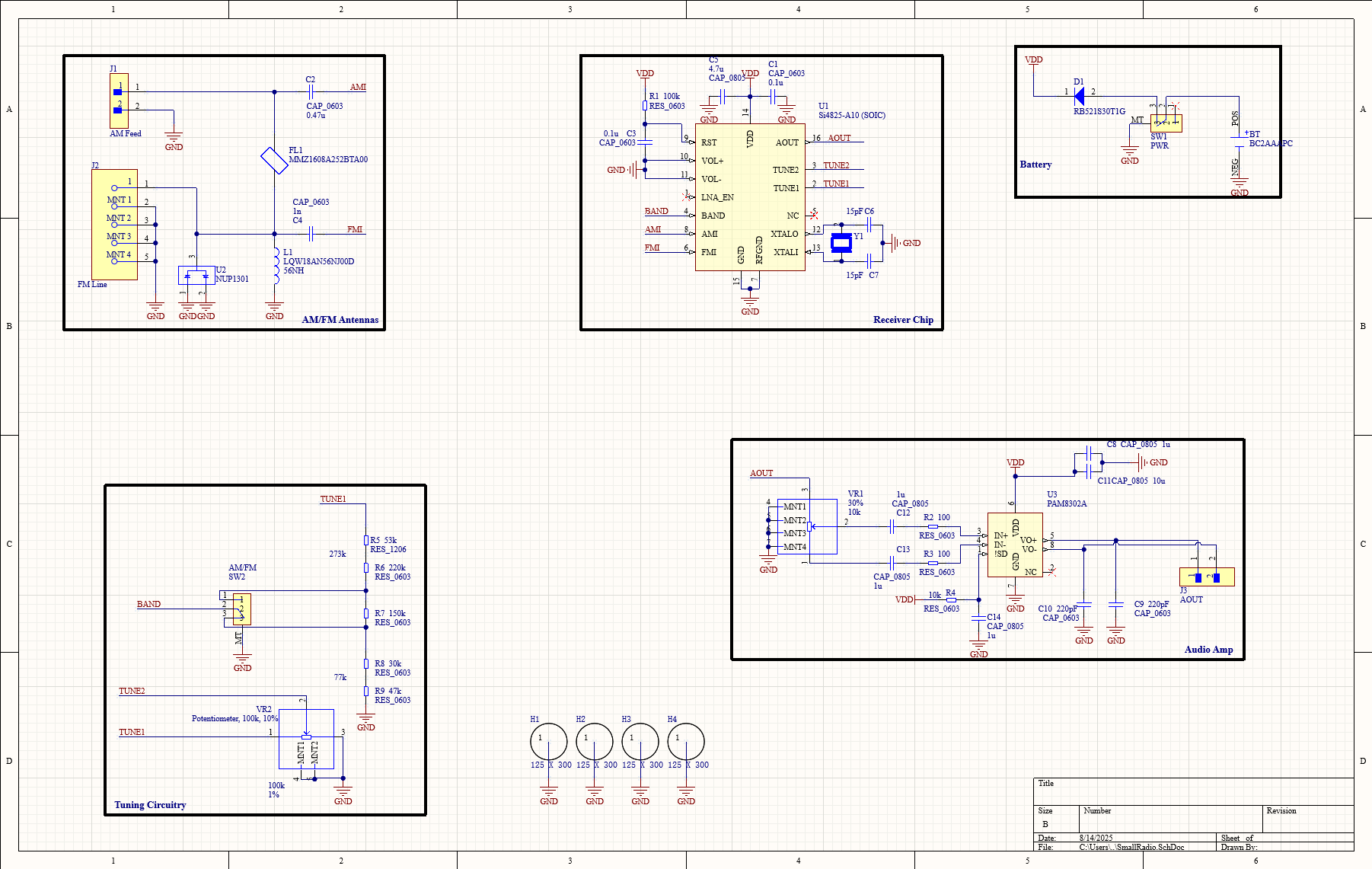
This project implements a compact AM/FM radio based on the Si4825 digital signal processor (DSP) and a PAM8302 audio amplifier. The design combines discrete analog components with digital signal processing and is implemented on a two-layer PCB. The receiver supports standard AM and FM bands and features an AGC-modified audio stage to maintain consistent output levels. The design prioritizes minimal PCB footprint and component cost while delivering clear audio performance.
Development Log (as of August 14, 2025)
The project has progressed to a version 1 prototype. Schematic and layout design were guided by the Si4825 datasheet and reference layout recommendations. Key considerations included minimizing trace lengths for AM and FM inputs, careful antenna placement, and implementing solid ground planes on both layers to reduce EMI.
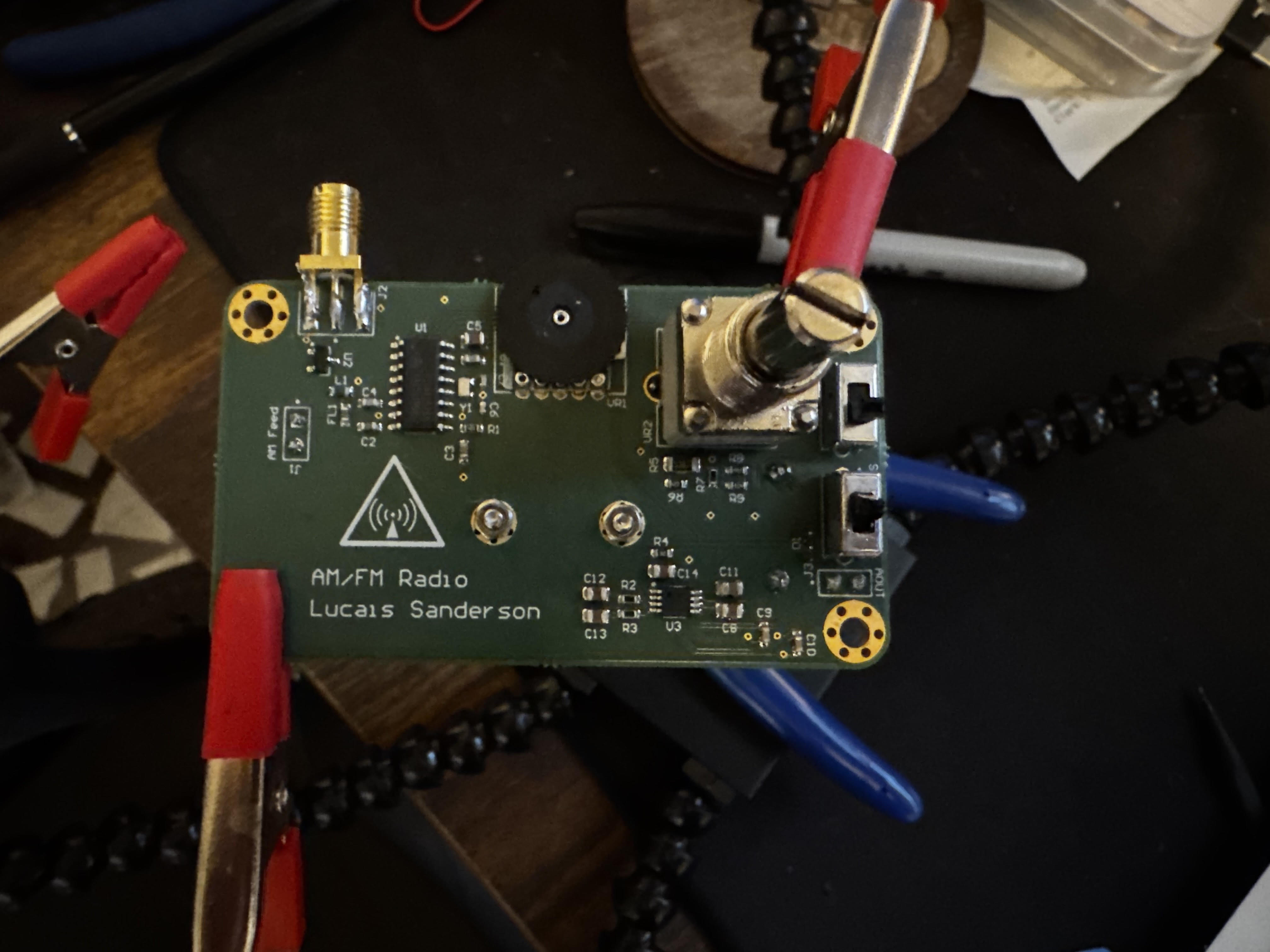
After verifying the design in Altium Designer, Gerber files were generated and sent to Aisler (Germany) for fabrication. The boards arrived with high-quality ENIG finish. Component placement included SMT devices as small as 0402 and SOD523, all successfully reflowed without visible bridging or damage. Through-hole components were hand-soldered, and power was applied via two AAA batteries for initial testing.
Upon testing, no functional output was observed. Diagnostic measurements revealed an open Schottky diode and a short between VDD and GND. The likely cause is a solder bridge or defective filtering capacitor. A systematic approach—removing and testing capacitors individually—is planned to identify the short. Additionally, the chosen Schottky diode (200 mA max forward current) may be undersized for the 2 W, 8 Ω speaker load.
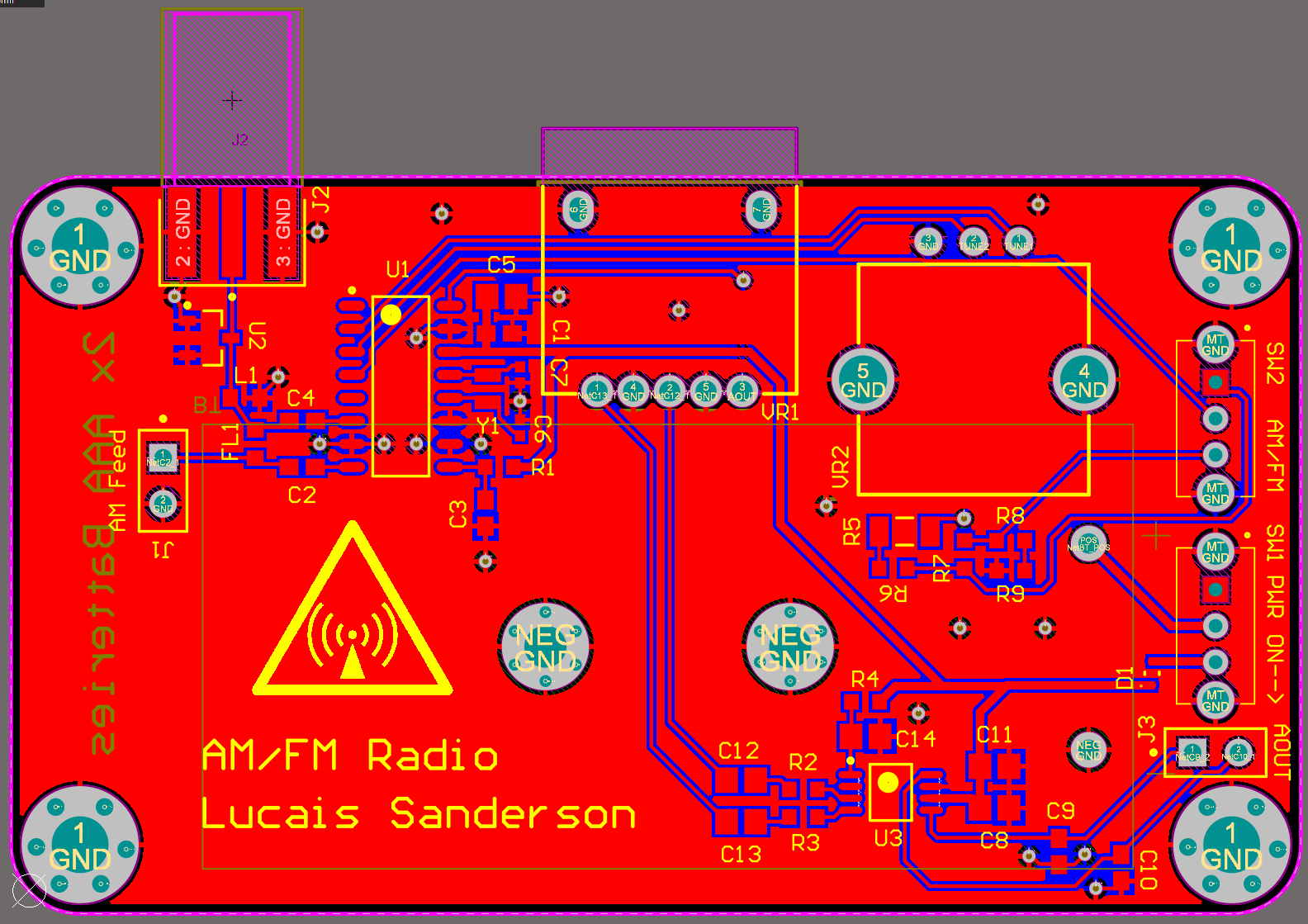
For the next iteration, the plan includes selecting a higher-current reverse-polarity diode and revising capacitor footprints. The current footprints were auto-generated in Altium and pads are narrower than typical SMT standards, which may contribute to shorts. Further diagnostics will be performed to locate the VDD-GND short.